
The Arab-Islamic civilization in Andalusia represents a significant historical period in the development of Islamic civilization. During the Middle Ages, Andalusia was considered a paradise of knowledge, culture, and civilizational coexistence. This civilization lasted from the 8th to the 15th century AD, witnessing eras of prosperity and immense scientific and cultural progress.
Throughout this period, various independent Islamic states ruled Andalusia, beginning with the Umayyad state and continuing through the Almoravids and the Almohads. This civilization was deeply influenced by the cultural and religious diversity of the region’s inhabitants, where Muslim, Christian, and Jewish communities lived together, coexisting and interacting with one another.
The Arab-Islamic civilization in Andalusia was a leading center for science, philosophy, literature, and the arts. Andalusian cities evolved into pioneering cultural and scientific powerhouses within the Islamic world, characterized by economic and cultural flourishing.
Andalusia witnessed brilliance in the fields of science, mathematics, medicine, astronomy, philosophy, and literature. There were vital philosophical and scientific schools, such as the schools of Toledo, Córdoba, and Ceuta. Arab scholars translated numerous Greek, Indian, and Persian works into Arabic, which significantly contributed to the expansion of global knowledge and culture.
The arts also flourished in Andalusia, with excellence in architecture, decoration, sculpture, literature, and music. Andalusian arts were influenced by Islamic, Christian, and Jewish traditions, blending the diverse cultural elements of its society.
Furthermore, Andalusia served as an important hub for commercial exchange and trade between the East and the West. Andalusian cities experienced substantial economic growth and significant developments in industry, agriculture, and commerce.
Islamic Civilization in Andalusia
The Arab-Islamic civilization in Andalusia is renowned as the product of the Arab and Muslim presence in the Iberian Peninsula from the 8th century until the 15th century AD. Throughout the ages, it left a rich cultural and scientific legacy that influenced neighboring European civilizations and contributed to the development of science, arts, and literature during the Middle Ages.
Here is an overview of the origins of this ancient civilization:
The Islamic Conquest
The Islamic conquest of Andalusia began in 711 AD by the Umayyad Muslim army led by General Tariq ibn Ziyad. The Islamic army managed to defeat the forces stationed in the region.
Expansion of the Umayyad State
Following the conquest, the Umayyad state in Andalusia began to expand and develop. The Umayyads established a new capital, Córdoba, and set up a strong administrative system and political stability.
Cultural and Scientific Prosperity
During the Umayyad and later Andalusian periods, the region witnessed numerous cultural and scientific contributions. Greek, Roman, and Indian books were translated, transferring knowledge to the Islamic West. Numerous libraries, scientific centers, and universities were established, such as the University of Córdoba.
Cultural Coexistence
Islamic civilization flourished rapidly in Andalusia, witnessing cultural coexistence between Muslims, Christians, and Jews. There was freedom to practice different religions and languages, leading to cultural exchanges and mutual influences in architecture, literature, and the arts.
The Fall of the Umayyad State and the Petty Kingdoms (Taifas)
Over the following centuries, Andalusia transformed into small, competing kingdoms (Taifas) embroiled in internal conflicts. Christian kingdoms exploited these internal struggles to expand their influence. Andalusia experienced political and social unrest, eventually leading to the Spanish conquest in the 15th century, which ended the era of Arab-Islamic civilization in the region. Many Andalusian scholars, artists, and writers were displaced, and the cultural and scientific heritage accumulated over centuries was scattered.
Legacy
Despite its end, the Arab-Islamic civilization in Andalusia maintains a prominent impact on history and culture. It left behind a rich legacy manifested in stunning Andalusian architecture, such as the famous architectural styles and beautiful mosques like the Great Mosque of Córdoba. Furthermore, the philosophical and scientific works translated and developed in Andalusia continue to influence science and thought to this day.
Key Landmarks of Islamic Civilization in Andalusia
The Arab-Islamic civilization in Andalusia was a magnificent era of civilizational coexistence and scientific and cultural progress. It left behind a significant and diverse cultural legacy that continues to inspire many cultural and scientific fields to this day.
Andalusia was home to several prominent Islamic landmarks. Here are some of the most famous and distinctive ones:
Mosque-Cathedral of Córdoba
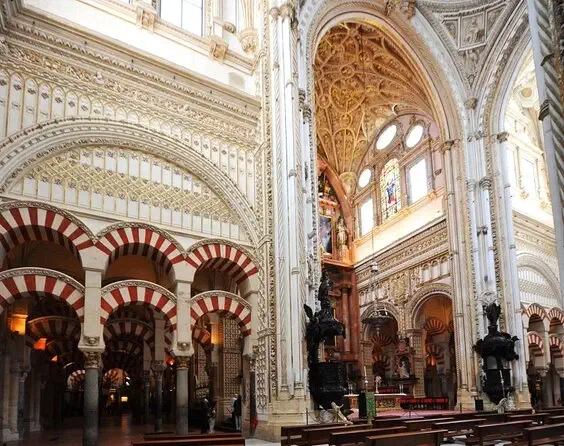
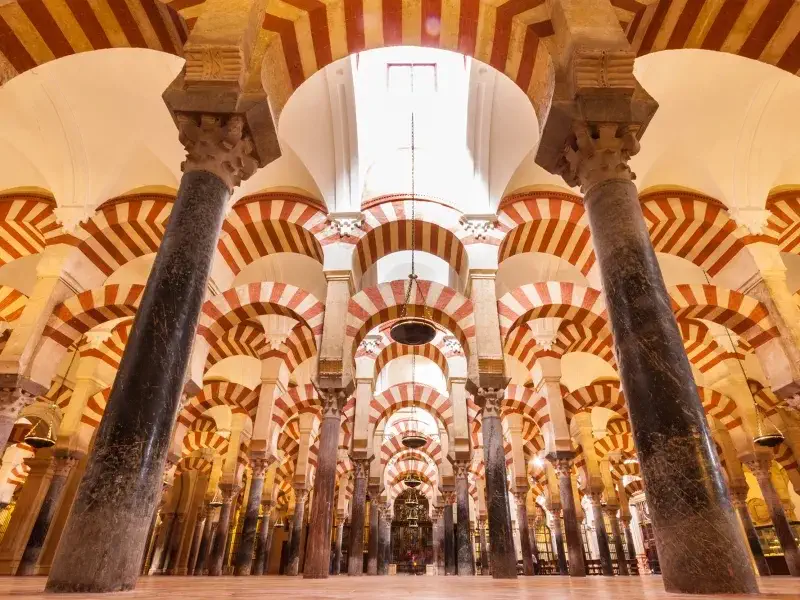
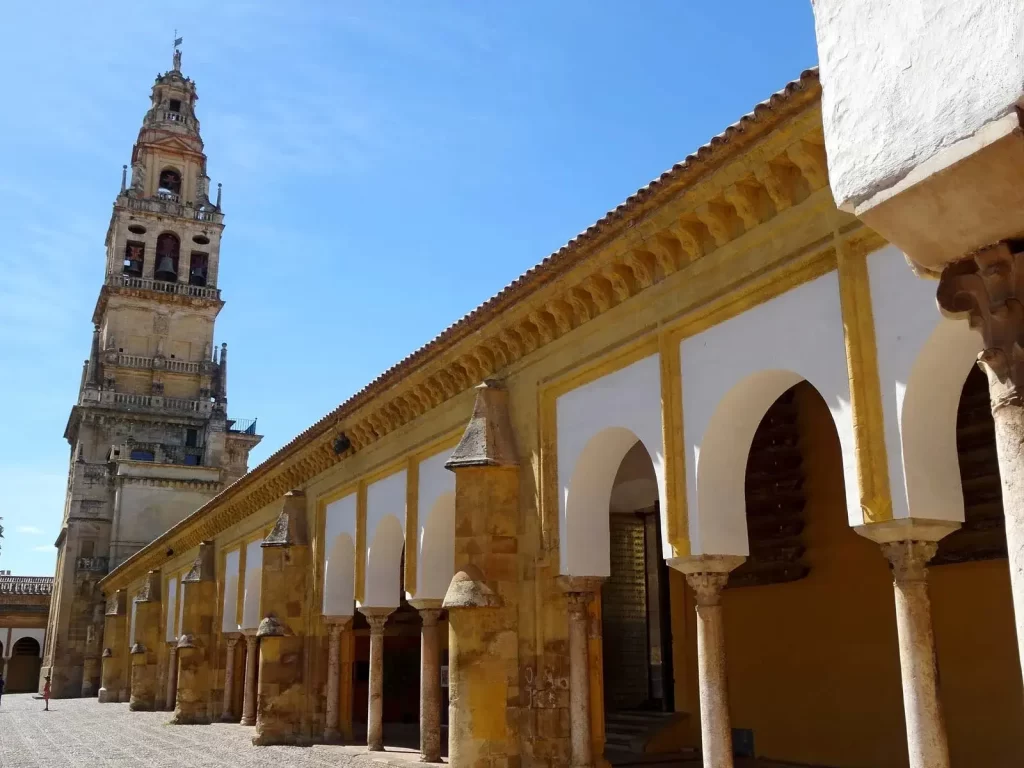
The Great Mosque of Córdoba is considered one of the greatest mosques in the Islamic world. It is also distinguished by its vast hall, ornate marble columns, and its famous dome.
The construction of the mosque was completed in the 10th century, and it was later converted into a cathedral following the Christian conquest of Andalusia.
Alhambra
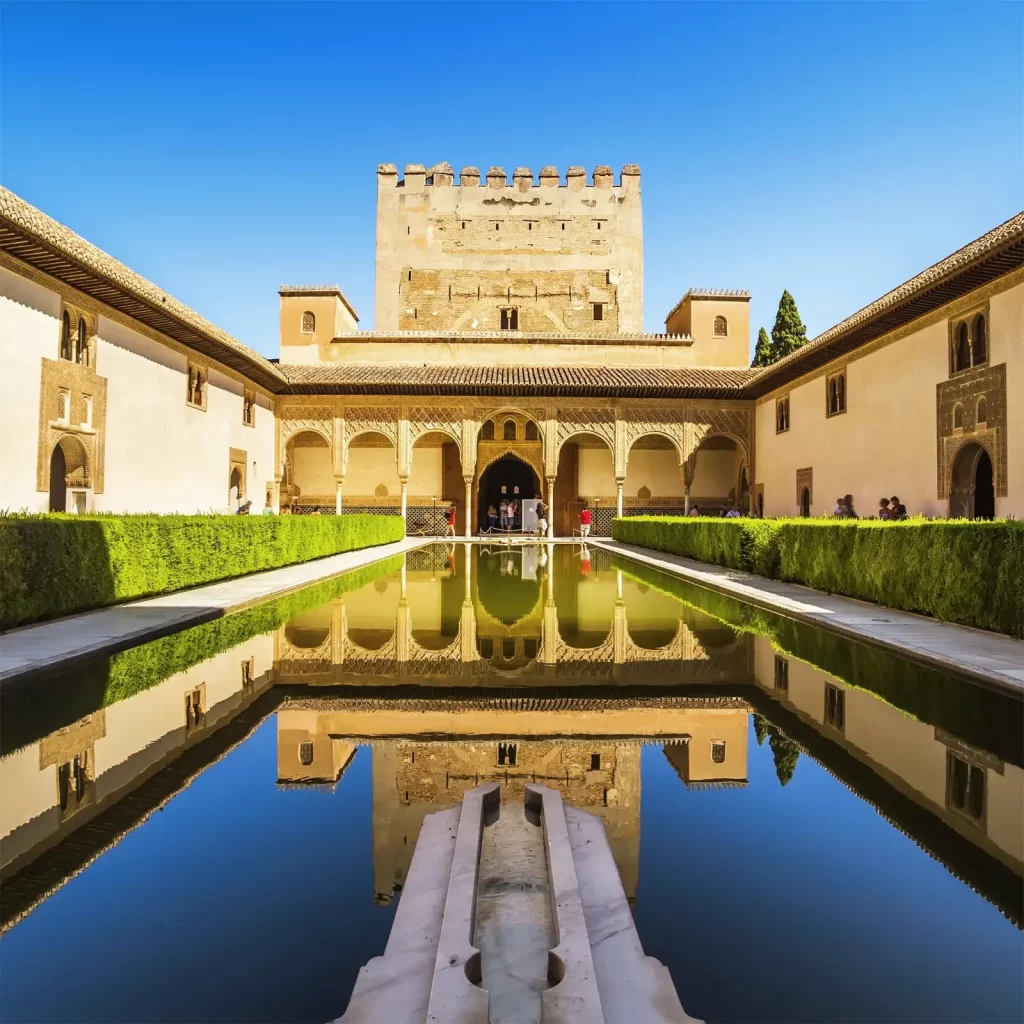
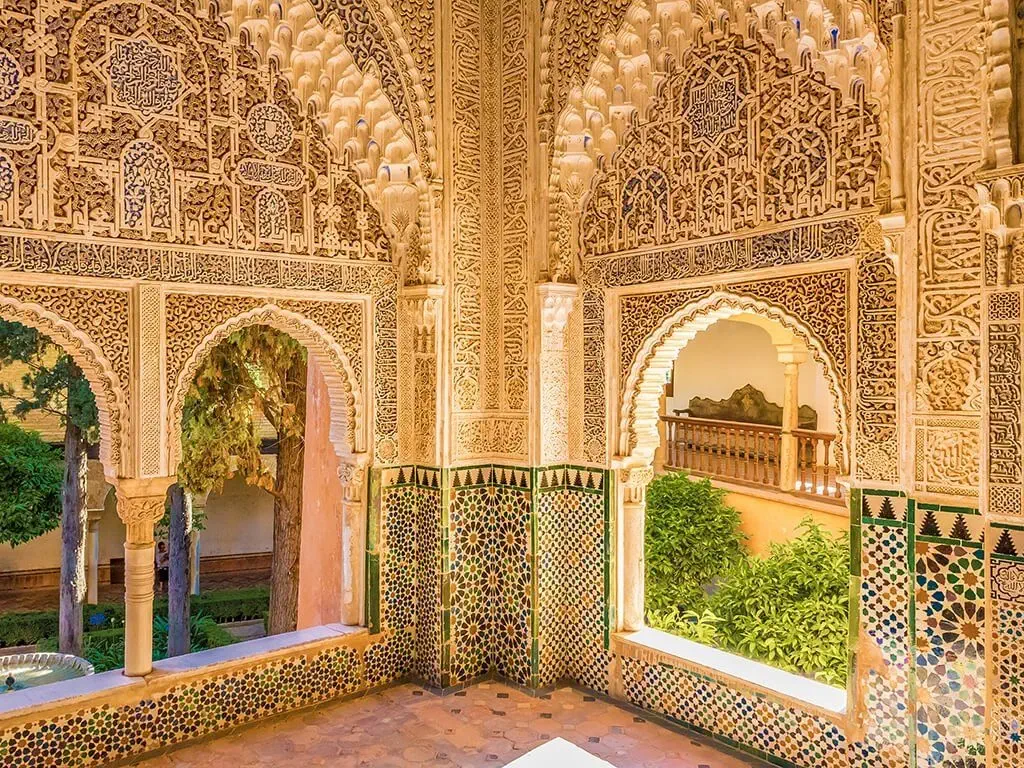
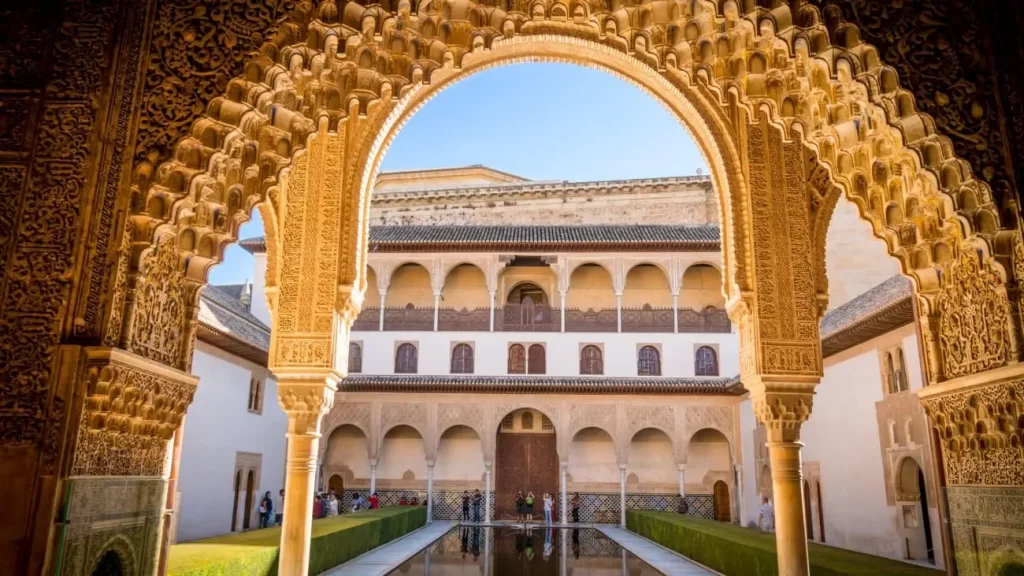
The Alhambra Palace in Granada is considered one of the most prominent Islamic landmarks in Andalusia. It is characterized by its unique Andalusian architectural design and its walls and fortifications adorned with Islamic patterns.
It is a magnificent complex of fortified palaces that showcases the pinnacle of Islamic architecture and design, consisting of stunning palaces, courtyards, gardens, intricate geometric patterns, and calligraphy.
The Old City of Toledo
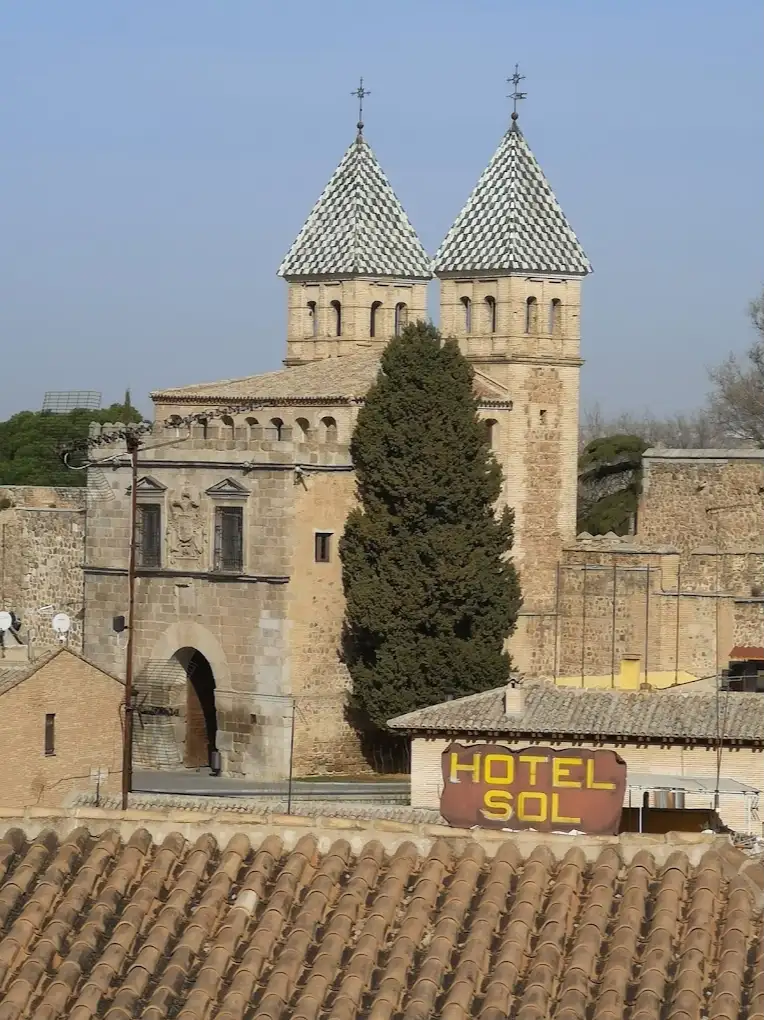


The Old City of Toledo dates back to the Middle Ages and represents a unique blend of Islamic, Christian, and Jewish architecture. It is characterized by its network of narrow streets, historic buildings, public baths, and traditional shops.
The Roman Bridge of Córdoba
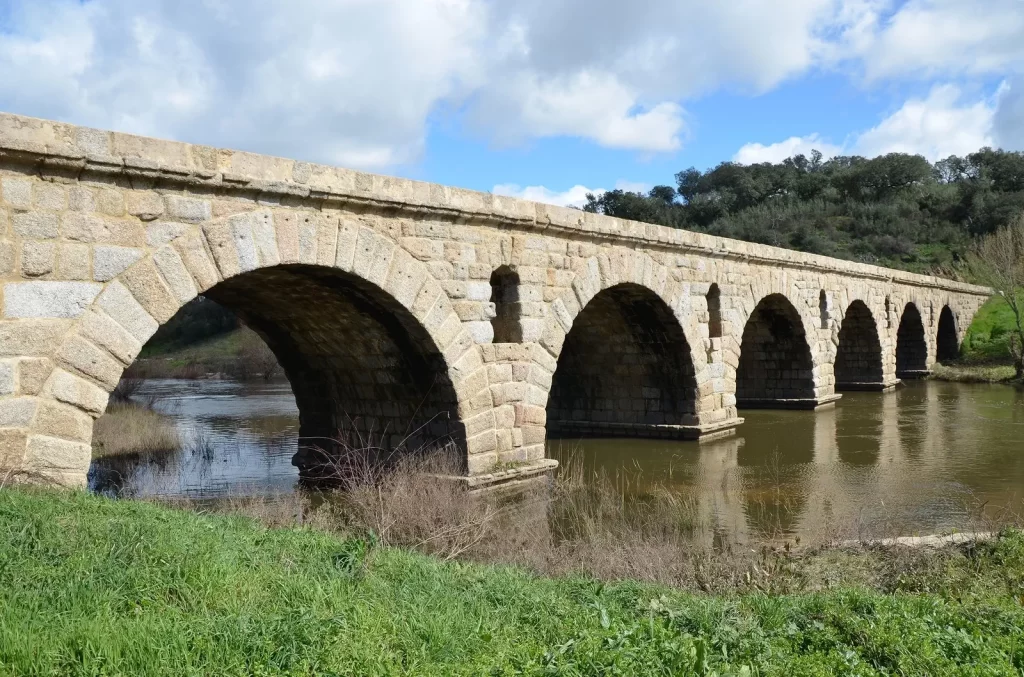
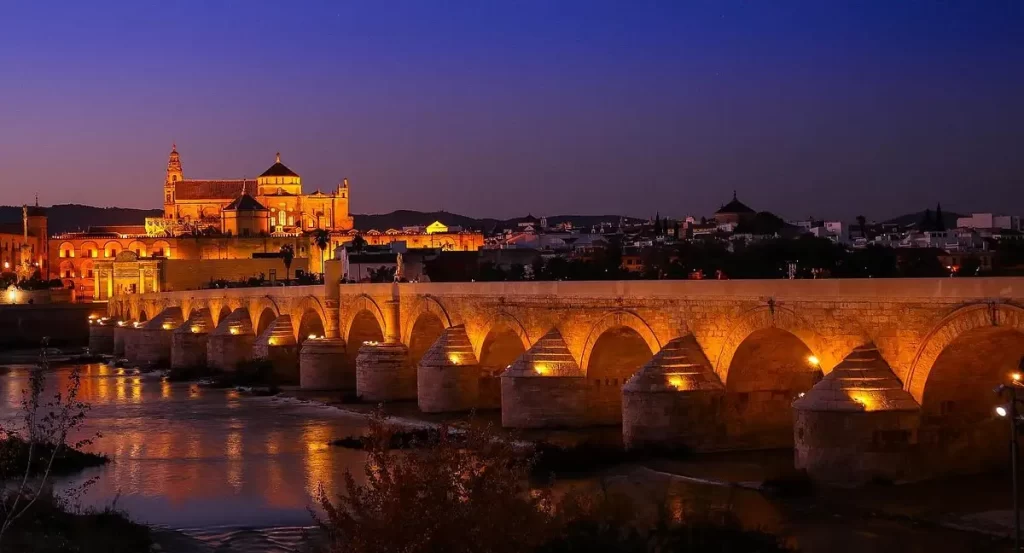
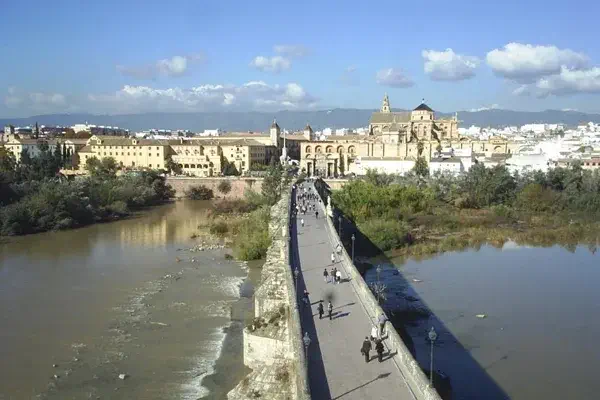
Located in the city of Córdoba, it is considered one of the oldest bridges in Andalusia. It is distinguished by its unique design and its historic arches that span across the Guadalquivir River, stretching for over 200 meters.
Medina Azahara
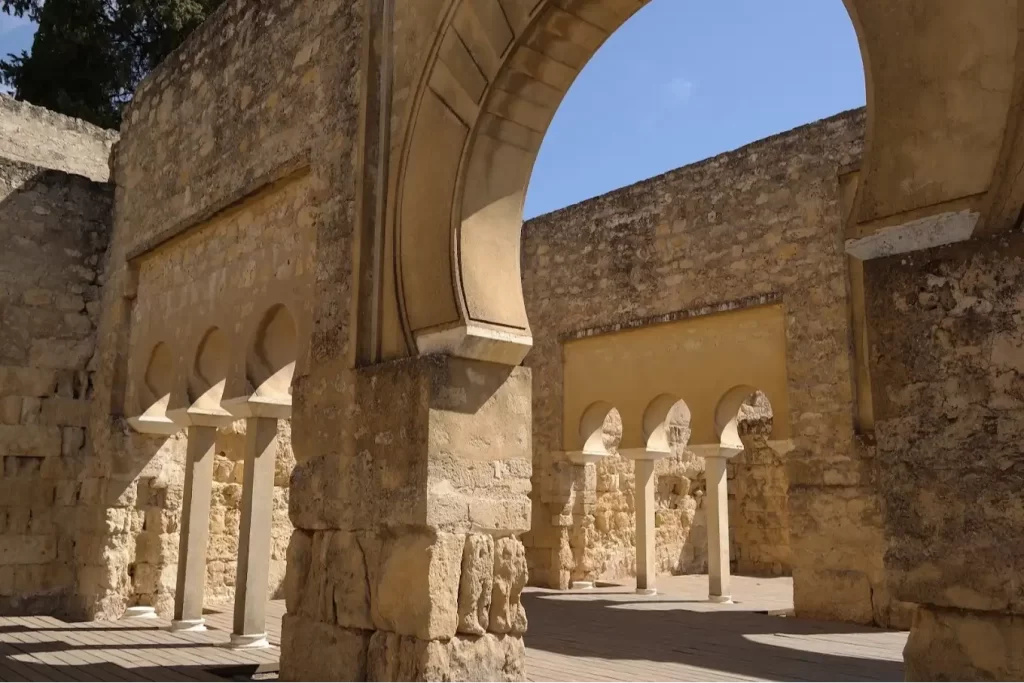
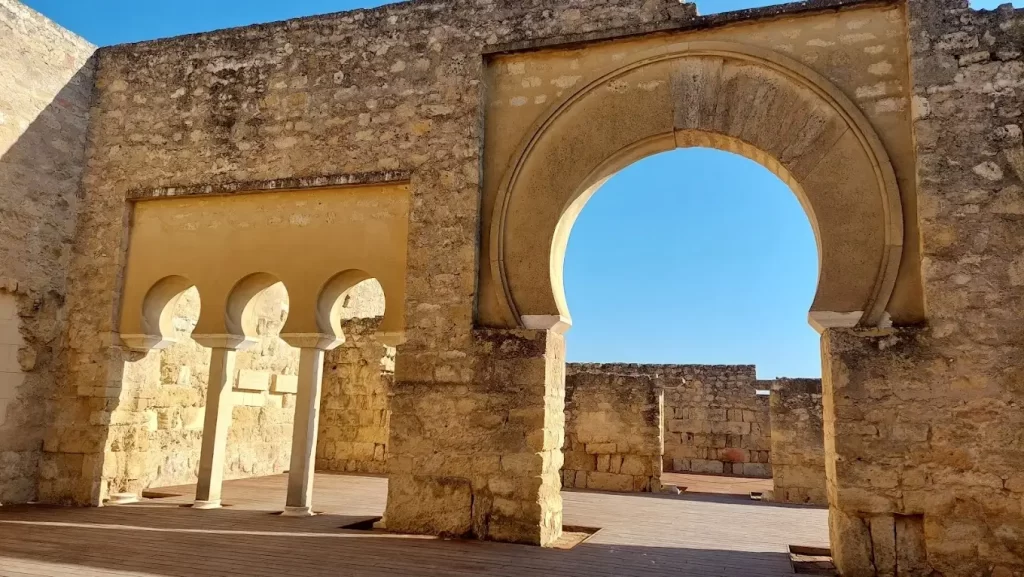
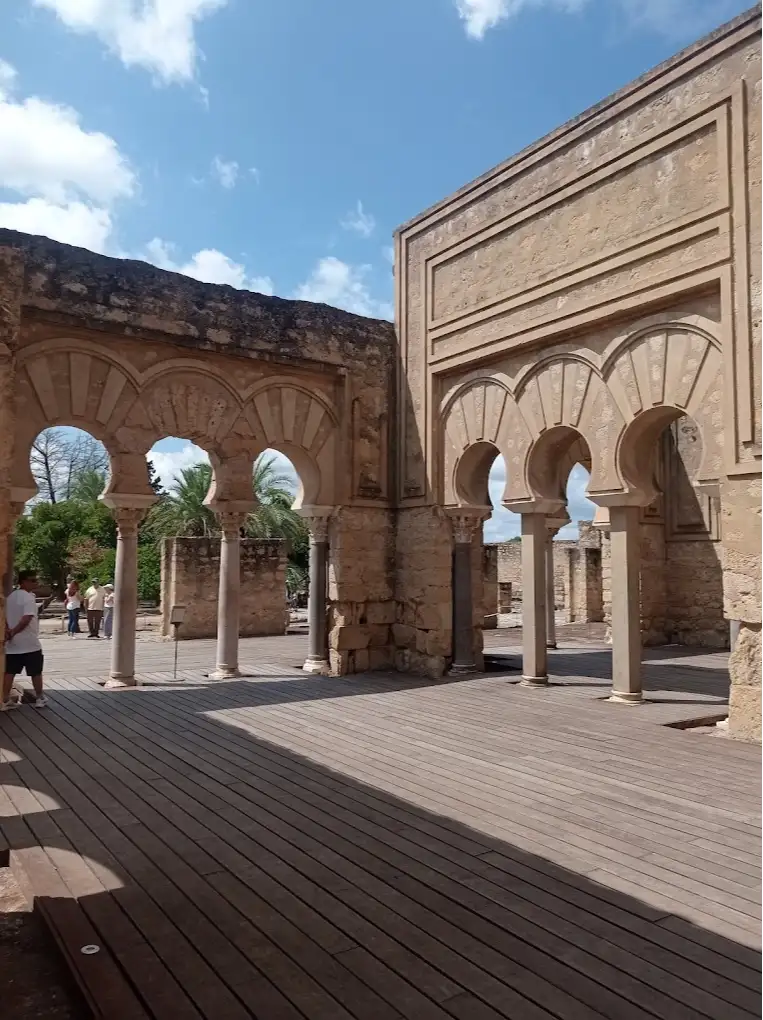
Also known as the “Brilliant City,” it was a majestic palatine city built during the Caliphate of Córdoba. It served as the administrative and political heart of the Umayyad Caliphate in Andalusia.
Although it is now mostly in ruins, its remains offer a profound glimpse into the opulence and grandeur of Islamic civilization in the region.
Catedral de Sevilla
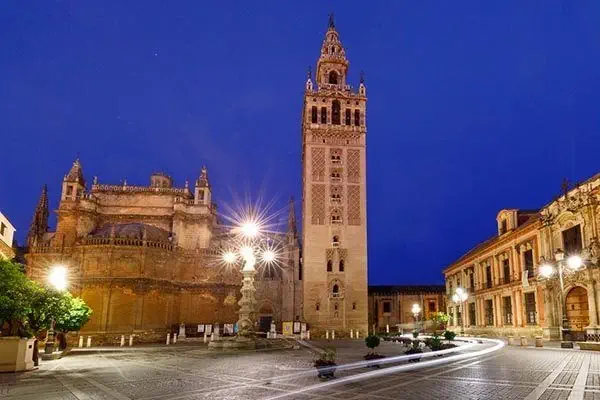
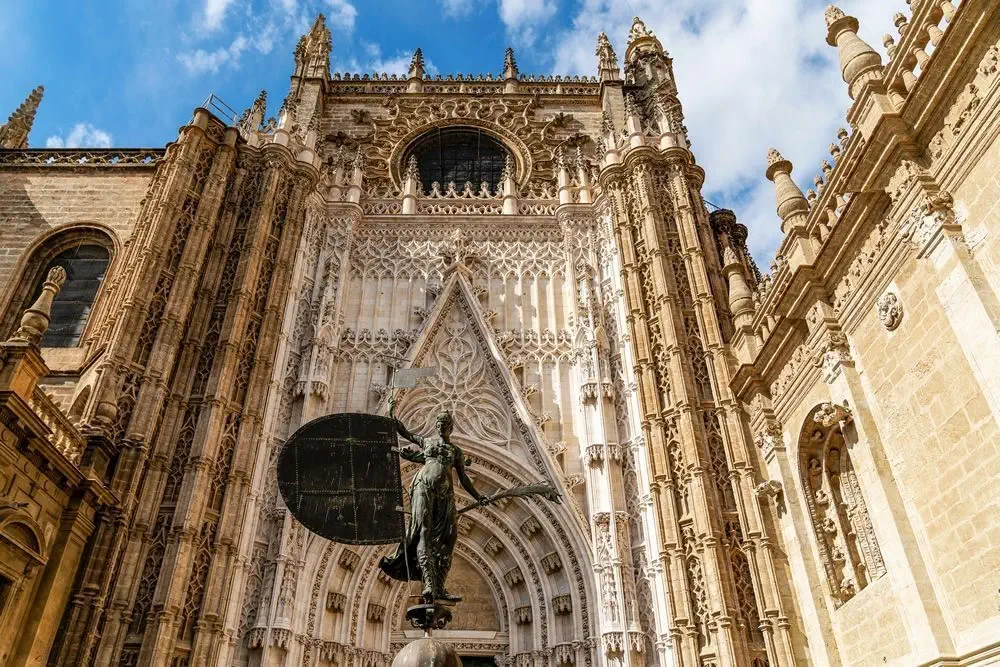
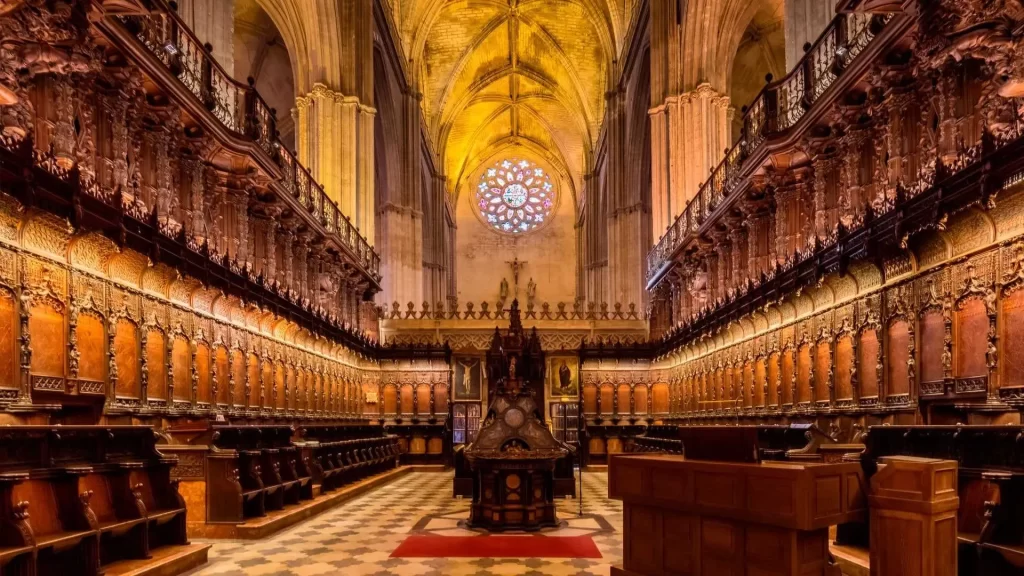
The Great Mosque of Seville, also known as the Seville Cathedral, is a UNESCO World Heritage site. It was originally built as a mosque during the Almohad period and displays a blend of Islamic and Christian architectural elements. Following the Christian Reconquista, it was converted into a cathedral, resulting in a unique harmony of styles.
Royal Alcázar
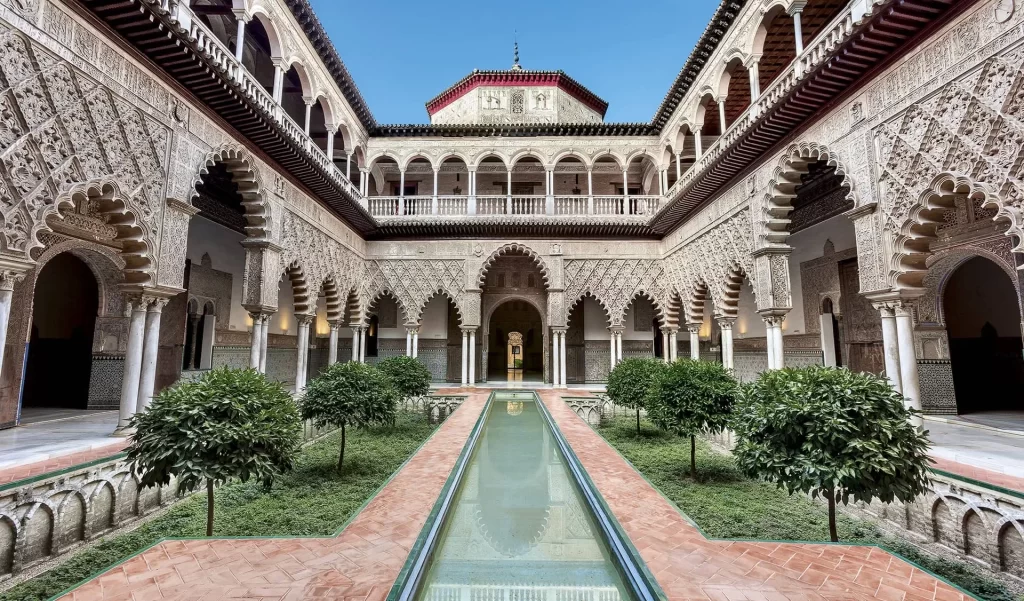
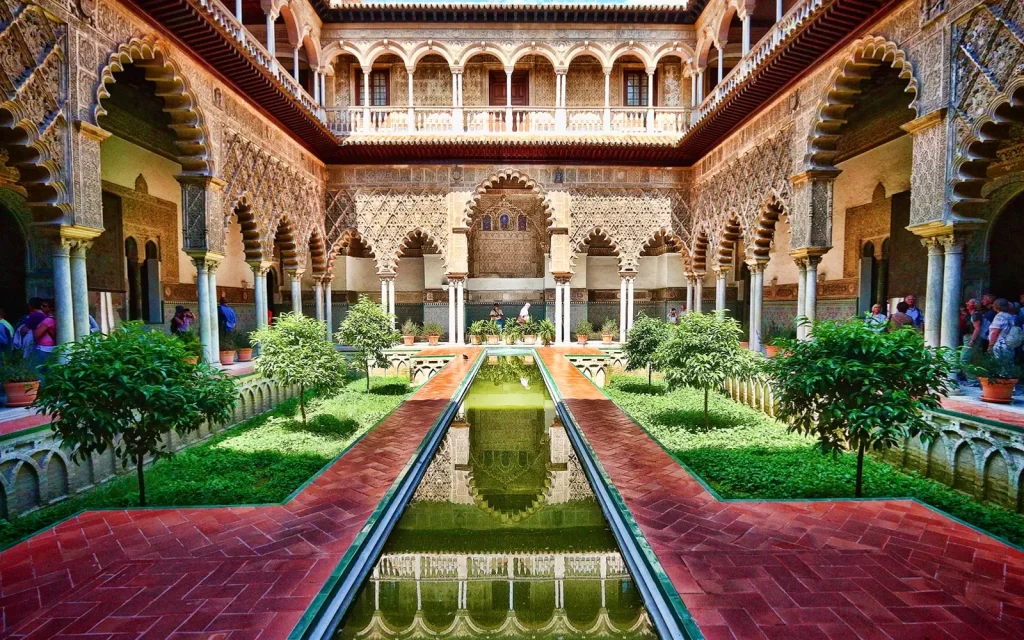
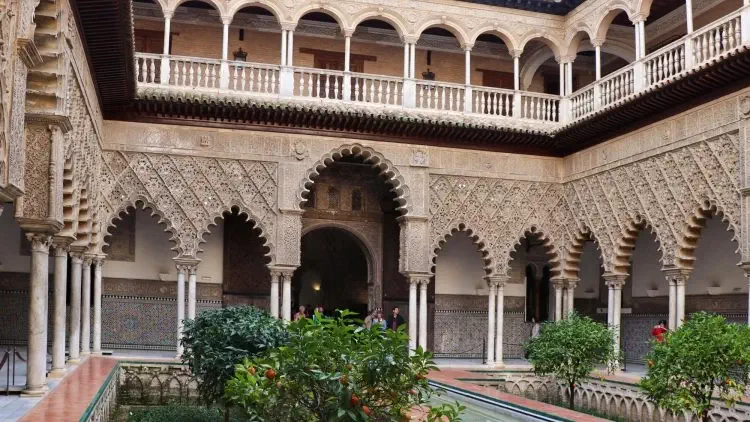
The Royal Alcázar is a renowned royal palace in Seville, famous for its flourishing architecture. Throughout history, it served as a residence for both Muslim and Christian rulers. The palace is distinguished by its beautiful gardens, elaborate courtyards, and stunning tilework.
The duration of Arab rule in Andalusia
Arab rule in Andalusia lasted for approximately 800 years (from 711 AD to 1492 AD).
- The Beginning (711 AD): The Islamic conquest began under the leadership of Tariq ibn Ziyad, marking the start of the Muslim presence in the Iberian Peninsula.
- The Golden Age: Andalusia evolved from an emirate into an independent caliphate, reaching its zenith in the 10th century. Córdoba became a global beacon of science, culture, and architecture.
- Fragmentation (1031 AD): After the collapse of the Umayyad Caliphate, the region split into “Taifas” (small independent kingdoms). These internal conflicts weakened the Muslim political and military stance.
- The End (1492 AD): The rule officially ended with the fall of Granada, the last Muslim stronghold, to the Catholic Monarchs (Ferdinand II and Isabella I).
Best Books on Islamic Civilization in Andalusia
Andalusian civilization is a pivotal period in the development of Islamic civilization, representing the Middle Ages in the southern Iberian Peninsula. It was characterized by the coexistence of Muslims, Christians, and Jews, leading to significant advancements in science, arts, literature, and philosophy.
Many authors have written about Andalusian civilization and the cross-cultural impact it had on philosophical and scientific levels, highlighting the spirit of tolerance that prevailed. Some books focus on the political history and transitions, while others explore cultural contributions, such as “The Legacy of Muslim Spain” edited by Salma Khadra Jayyusi (often associated with scholarly contributions like those of Richard Fletcher).
Here are the key books mentioned:
1. Andalusia: Its Political, Cultural, and Social History
- Author: Abdelwahab Boussafsaf
- This book explores the history of Islamic civilization in Andalusia from the initial conquest to the final fall, covering various political, cultural, and social aspects.
2. Andalusia: Readings in Its History and Civilization
- Author: Abdulrahman Al-Shubaili
- It provides a comprehensive overview of Islamic Andalusia and its impact on the Arab and Islamic world, addressing multiple themes related to Andalusian heritage.
3. History of Islamic Andalusia
- Author: Muhammad bin Abdul Hadi Al-Rashidi
- Considered one of the best books on the subject, it chronicles the history of Andalusia from the conquest to the fall, detailing the political and social events that shaped the era.
4. Andalusia and the Moroccan Role in Achieving Cultural Rapprochement Between Peoples
- Author: Mohammed Al-Hajj
- This book focuses on Morocco’s role in fostering cultural ties between the peoples of Andalusia and North Africa, highlighting the mutual influence and cultural exchange between them.
5. Science and Civilization in Islamic Andalusia
- Author: Abdullah Al-Shayji
- This work reviews the scientific and cultural contributions of Muslims in Andalusia, covering various fields such as medicine, engineering, astronomy, mathematics, and literature.
Frequently Asked Questions
The Arab-Islamic civilization in Andalusia was a source of many vital cultural contributions, including advancements in science, philosophy, medicine, mathematics, and engineering. Andalusia also witnessed a flourishing in literature, poetry, music, and the arts.
Córdoba, Granada, and Seville are the most prominent Andalusian cities that reflect the Arab-Islamic influence. Magnificent mosques were built there, such as the Great Mosque of Córdoba and the congregational mosques of Granada.
Some of the main tourist attractions include the Great Mosque of Córdoba (Mezquita), the Old City of Granada (including the Alhambra and its palaces), the Generalife, the Alcazaba, the Old City of Seville, and the Albayzín district in Granada.
The Arab-Islamic civilization in Andalusia ended in the 15th century following the completion of the conquest by the Spanish Catholic Monarchs. Under Catholic rule, Muslims were displaced and expelled from Andalusia, leading to the end of Islamic governance in the region.
Yes, there is still a clear and visible influence of Arab-Islamic civilization in Andalusia today. Its traces can be seen in architecture, arts, music, cuisine, and the many Arabic loanwords and terms used in the Spanish language. Additionally, several Islamic archaeological landmarks remain and are considered famous tourist destinations worldwide.